Vietnam e-Visa applications can be rejected if applicants provide false information or fail to meet immigration requirements. Travellers asking does Vietnam e-Visa get rejected should also understand that an application requiring corrections is not necessarily refused. Incorrect passport details, unsuitable photographs, and incomplete declarations can create processing problems, while eligibility restrictions may prevent approval. Vietnam Visa Express explains common rejection reasons, how to check application decisions, and practical steps to take before submitting another request.
Why Does a Vietnam e-Visa Application Get Rejected?
Vietnam e-Visa applications may be rejected when applicants do not satisfy the relevant immigration requirements or provide dishonest information. Other application problems, including incorrect details and unsuitable documents, may require corrections before authorities can complete their assessment.
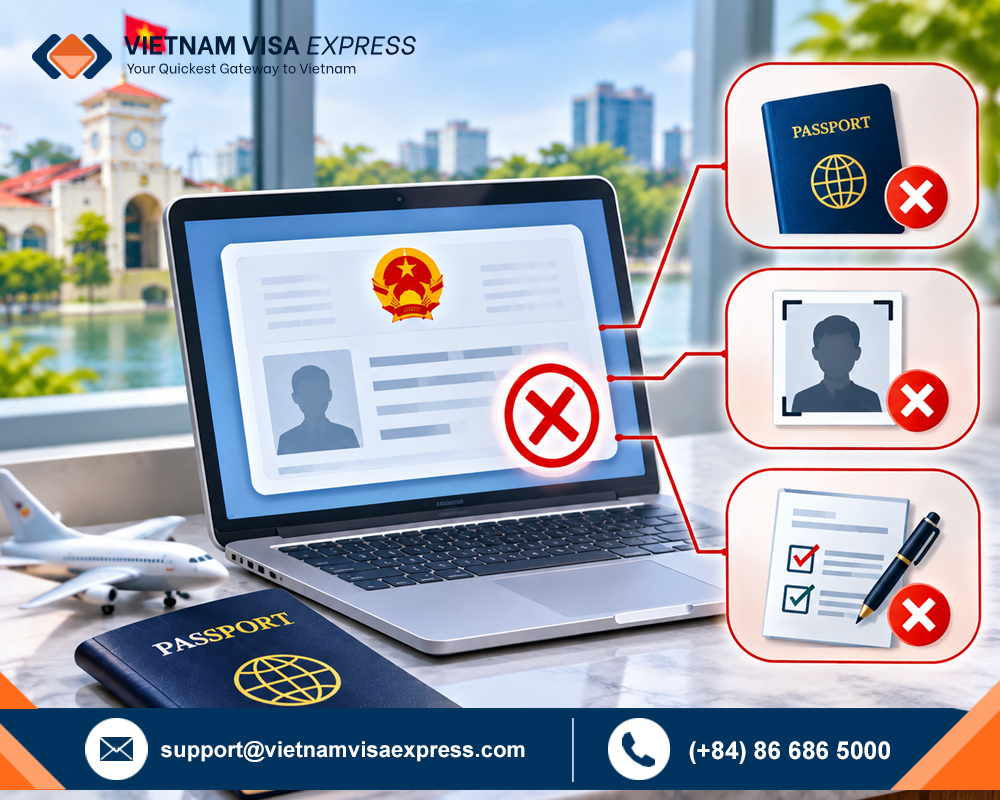
Common application errors can lead to Vietnam e-Visa rejection
Can Incorrect Passport Details Cause Rejection?
Incorrect passport information can affect an e-Visa application, particularly when the submitted details do not match the applicant’s travel document.
Common mistakes include misspelled names, incorrect passport numbers, and inaccurate dates of birth.
Some errors may require amendments rather than immediate rejection. Applicants should verify every field before submission and follow official correction instructions when necessary.
Can Poor-Quality Photographs Affect Visa Approval?
Yes. Unclear passport images or unsuitable portrait photographs may prevent an application from being accepted or require additional corrections.
Applicants should upload a readable passport information page and a recent, front-facing portrait that meets the application requirements.
Understanding how Vietnam e-Visa works helps travellers prepare the necessary documents before immigration review.
Can False Information Lead to e-Visa Refusal?
Yes. Vietnamese immigration instructions explicitly state that applications may be denied when dishonest declarations are discovered.
Applicants must provide complete, accurate, and truthful information in English.
False statements about identity, travel details, or other requested information can create serious immigration problems.
Always correct inaccurate details rather than attempting to conceal information that may affect your application.
What Immigration Conditions Can Prevent e-Visa Approval?
Beyond documentation errors, applicants must satisfy Vietnam’s legal conditions for electronic visa issuance. These include holding an appropriate passport and not falling within the categories of travellers who are legally ineligible for entry.
Can Immigration Restrictions Cause Visa Rejection?
Yes. Foreigners subject to applicable entry restrictions may be ineligible for an electronic visa.
Vietnamese immigration law identifies several circumstances in which entry may be refused, including relevant prior immigration violations and cases involving fraudulent documents.
Applicants with previous immigration problems should verify their eligibility before submitting another application.
Can You Apply for an e-Visa While Already in Vietnam?
The standard e-Visa application is intended for foreigners outside Vietnam. Travellers already in the country cannot simply extend their existing e-Visa online.
Those wondering can you extend Vietnam e-Visa should check whether they qualify for a new visa through sponsorship or another lawful immigration arrangement.
Does Religious Information Affect e-Visa Approval?
Vietnam’s e-Visa form requests information about religion, and applicants are expected to answer truthfully.
However, published official instructions do not establish that belonging to a particular religion automatically results in rejection.
Travellers wondering why does Vietnam eVisa ask for religion should focus on completing the required field accurately rather than changing their declaration to influence the decision.
How Can You Check if Your Vietnam e-Visa Was Rejected?
Applicants can check the result of their e-Visa application through Vietnam’s official electronic visa system. The recorded status helps distinguish applications awaiting review, those requiring amendments, and applications for which an immigration decision has been issued.
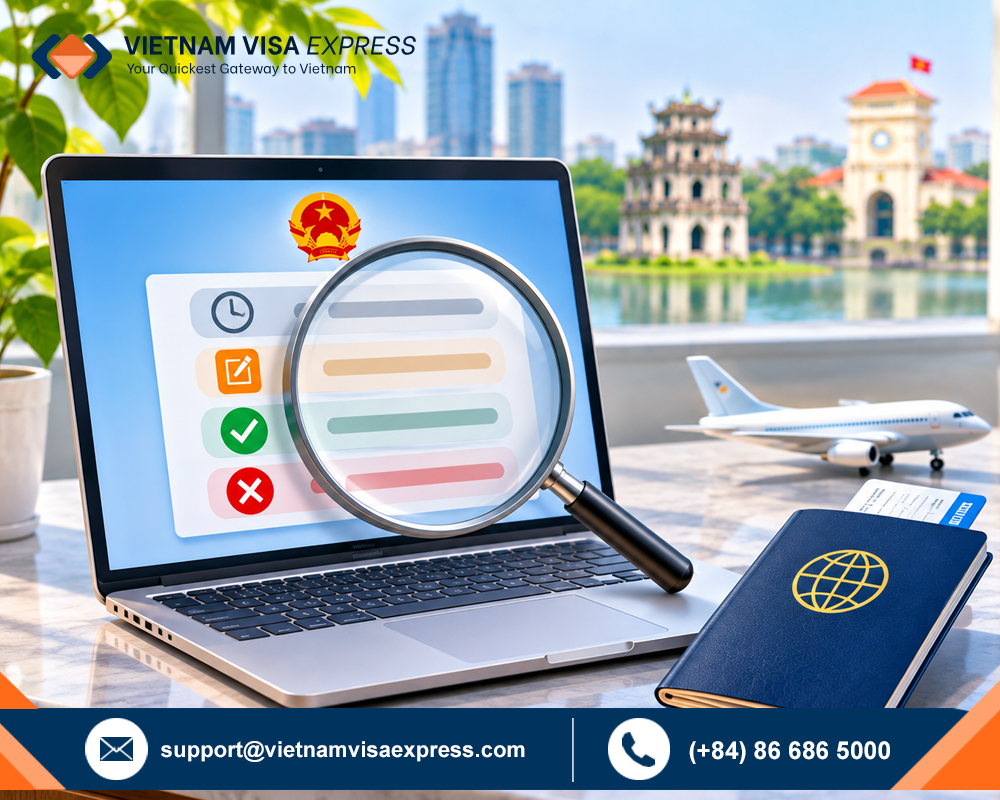
Check your e-Visa status carefully before making travel plans
Where Can You Check Your e-Visa Application Status?
Use the official Vietnam e-Visa application system to search for your submitted request.
You will generally need your registration code, registered email address, date of birth, and security verification information.
Travellers can retrieve their Vietnam e-Visa application through the appropriate official system after receiving a decision.
What Is the Difference Between Pending and Rejected?
A pending application remains under review and has not received a final approval or refusal decision.
An application requiring amendment needs additional information or corrections before processing can continue.
A rejected application has been refused by the authorities.
These statuses require different responses, so applicants should identify the exact result before taking action.
| Application status | Meaning | Recommended action |
|---|---|---|
| Pending | Application remains under review | Continue monitoring |
| Amendment required | Information or documents need correction | Follow official instructions |
| Approved | e-Visa has been issued | Download and verify |
| Rejected or denied | Application was refused | Check the stated reason |
| No application record found | Search information may be incorrect | Verify registration details |
The wording displayed may vary depending on the official application interface.
How Do You Find the Reason for Rejection?
The immigration application’s result-checking system can display a denial reason when one is provided.
Applicants should review the recorded decision and any instructions before submitting another request.
If the reason is unclear, contact the appropriate immigration support channel.
A legitimate application result should be verified through the government system. Understanding whether Vietnam e-Visa is legitimate helps travellers identify trustworthy application channels.
What Should You Do After a Vietnam e-Visa Rejection?
Receiving a visa refusal does not necessarily prevent every future application. However, applicants must understand why the original request was unsuccessful and determine whether the identified problem can be resolved before applying again.
Can You Reapply After an e-Visa Rejection?
Yes, submitting a new application may be possible when the applicant remains eligible and has addressed the issues affecting the previous request.
However, reapplying does not guarantee approval.
If the refusal relates to an immigration restriction, submitting identical information again may not resolve the problem.
Review the official result and seek clarification when necessary.
Do You Have to Pay Again After Rejection?
Government e-Visa application fees are generally non-refundable when an application is refused.
A new application ordinarily requires another payment.
The official government fees are:
- US$25 for a single-entry e-Visa.
- US$50 for a multiple-entry e-Visa.
Private assistance fees are separate and depend on the provider’s service conditions.
How Can You Reduce the Risk of Another Rejection?
Before submitting another application, review the previous decision and correct any identified errors.
Check the following details:
- Full name, date of birth, and nationality.
- Passport number and expiry date.
- Portrait photograph and passport image.
- Intended entry dates and travel information.
- Required declarations and supporting information.
- Eligibility under Vietnamese immigration rules.
A carefully completed Vietnam e-Visa application reduces avoidable documentation problems but does not guarantee government approval.
Common Questions About Vietnam e-Visa Rejection
Applicants often have concerns about processing delays, refusal notifications, and whether another application will be accepted. These answers clarify what can happen after submission.
Vietnam Visa Express helps travellers review e-Visa applications and documents
Is Vietnam e-Visa Rejection Common?
Vietnam does not provide a publicly verified general rejection rate in the official guidance reviewed here. Not every delayed or incorrect application is rejected. Some applications require amendments or additional verification before a decision.
Can You Get a Refund if Your Vietnam e-Visa Is Rejected?
Generally, no. Government e-Visa application fees are non-refundable when the request is refused. Refund conditions for optional private assistance are separate and should be confirmed before payment.
Can You Apply Again Immediately After Rejection?
A new application may be possible, but you should identify and address the refusal reason first. If the problem concerns immigration eligibility rather than a correctable document error, another application may not resolve it.
Get Vietnam e-Visa Application Support From Vietnam Visa Express
A rejected Vietnam e-Visa application requires careful review before deciding whether to correct information, seek clarification, or submit another request.
Vietnam Visa Express assists travellers with new e-Visa applications, document reviews, and urgent visa enquiries. Our team helps identify potential application errors and clarify available options, while final visa decisions remain with Vietnamese immigration authorities.
Contact Vietnam Visa Express
- Email: support@vietnamvisaexpress.com
- Hotline/WhatsApp/Zalo: (+84) 86 686 5000

Dr. Alaric A. Nathan is the CEO of Vietnam Visa Express, overseeing the company’s strategic direction and operational excellence. Under his leadership, the company is committed to providing transparent, reliable, and professional visa assistance services for international travelers.