Vietnam Visa Photo Guidelines Quality
Getting Your Visa Photo Right Is More Important Than You Think
When preparing a Vietnam eVisa application, many travellers pay close attention to their passport details and travel itinerary. However, one of the most common reasons applications are delayed is an incorrect or poor-quality passport photo.
Submitting a photo that meets Vietnam’s visa requirements can help avoid unnecessary delays and improve the overall application process. Whether you’re taking the photo yourself or visiting a professional photo studio, understanding the latest Vietnam Visa Photo Guidelines is an important first step.
This guide explains the latest Vietnam Visa Photo Guidelines, passport bio page requirements, common mistakes to avoid, and practical tips to help you prepare your application with confidence.
What Are the Vietnam Visa Photo Requirements?
To support a smooth application process, your passport photo should meet the following general guidelines:
- Be a recent colour photograph.
- Use a plain white or light-coloured background.
- Show your full face clearly, facing the camera.
- Maintain a neutral facial expression.
- Ensure your eyes are open and clearly visible.
- Wear normal everyday clothing.
- Avoid sunglasses or tinted glasses.
- Ensure the photo is sharp, well-lit, and high resolution.
Providing a clear and accurate photo helps immigration authorities verify your identity more efficiently.
Before preparing your documents, it’s also helpful to review the complete Vietam eVisa Requirements to ensure you have everything needed for your application.
Vietnam Visa Photo Guidelines Quality
Don’t Forget Your Passport Bio Page!
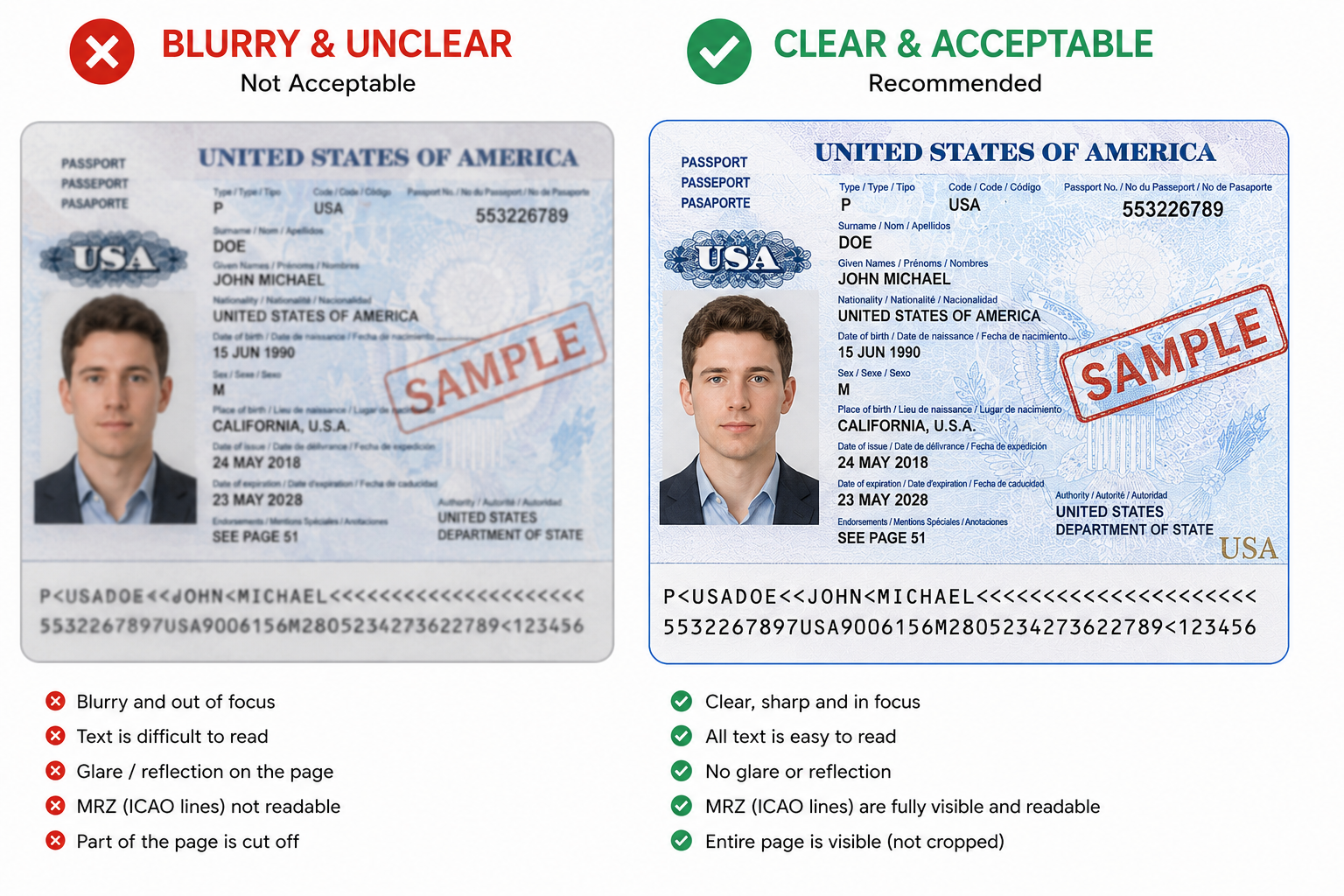
In addition to your portrait photo, applicants are also required to upload a clear image of their passport’s biographical page when applying for a Vietnam eVisa.
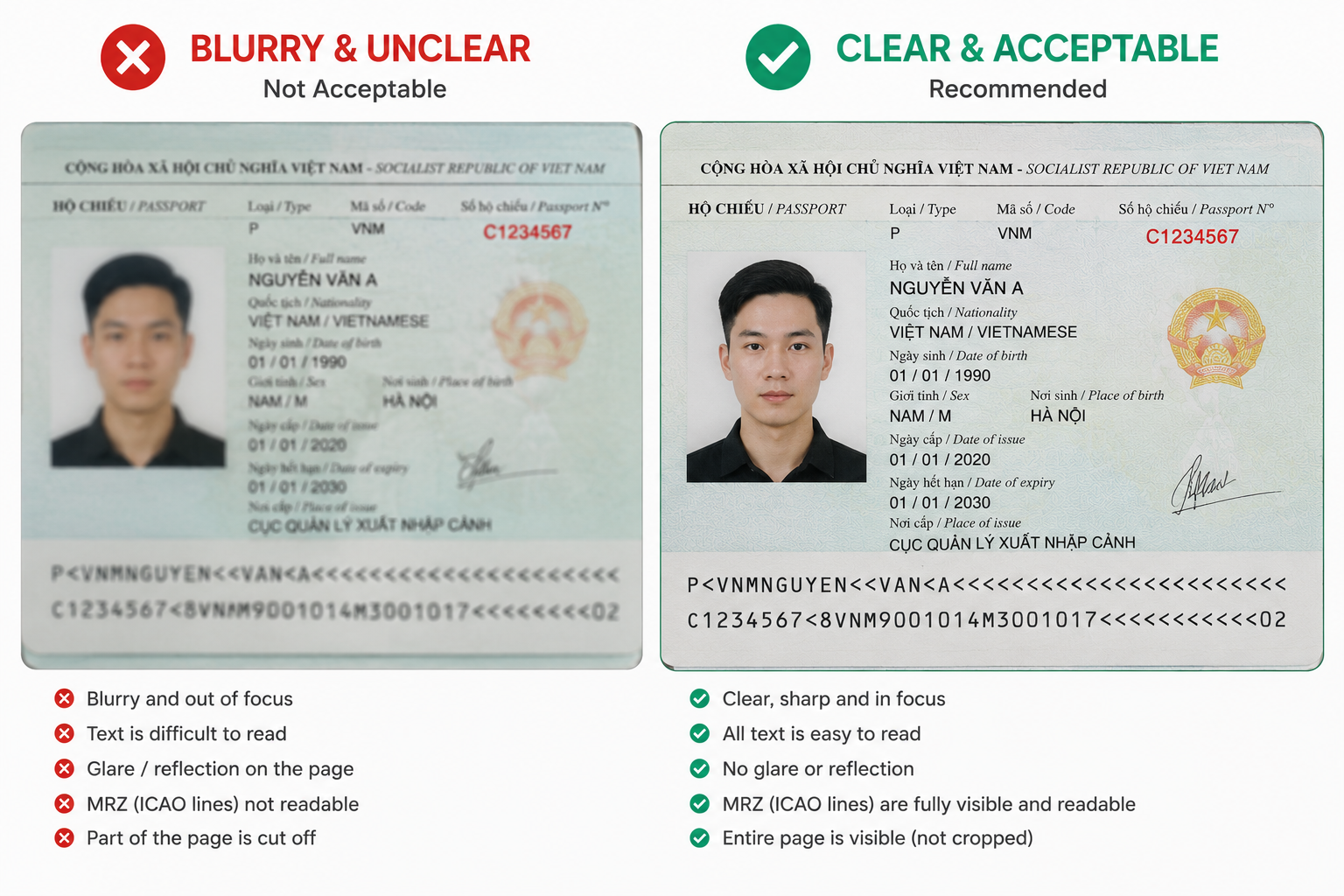
The passport bio page should:
- Show the entire passport information page.
- Display your personal information clearly.
- Keep the ICAO (machine-readable) lines at the bottom fully visible.
- Be free from glare, shadows, or reflections.
- Be uploaded in high resolution without cropping any part of the page.
Before submitting your application, carefully check that all passport details can be read easily, as poor-quality scans may result in processing delays or requests for a replacement image.
Common Photo & Passport Biopage Mistakes That Can Delay Your Application
Even small issues with your passport photo may result in delays or requests to submit a replacement image.
Some common mistakes include:
- Blurry or low-resolution photos.
- Dark shadows on the face or background.
- Wearing sunglasses or reflective glasses.
- Photos with filters or excessive editing.
- Cropped or partially visible faces.
- Busy or coloured backgrounds.
- Poor lighting.
- Wearing hats or head coverings (unless worn for religious purposes).
Before uploading your photo, take a few moments to check that it meets all recommended guidelines.
Vietnam Visa Photo & Passport Biopage: Requirements and Size
What size should my Vietnam visa photo be?
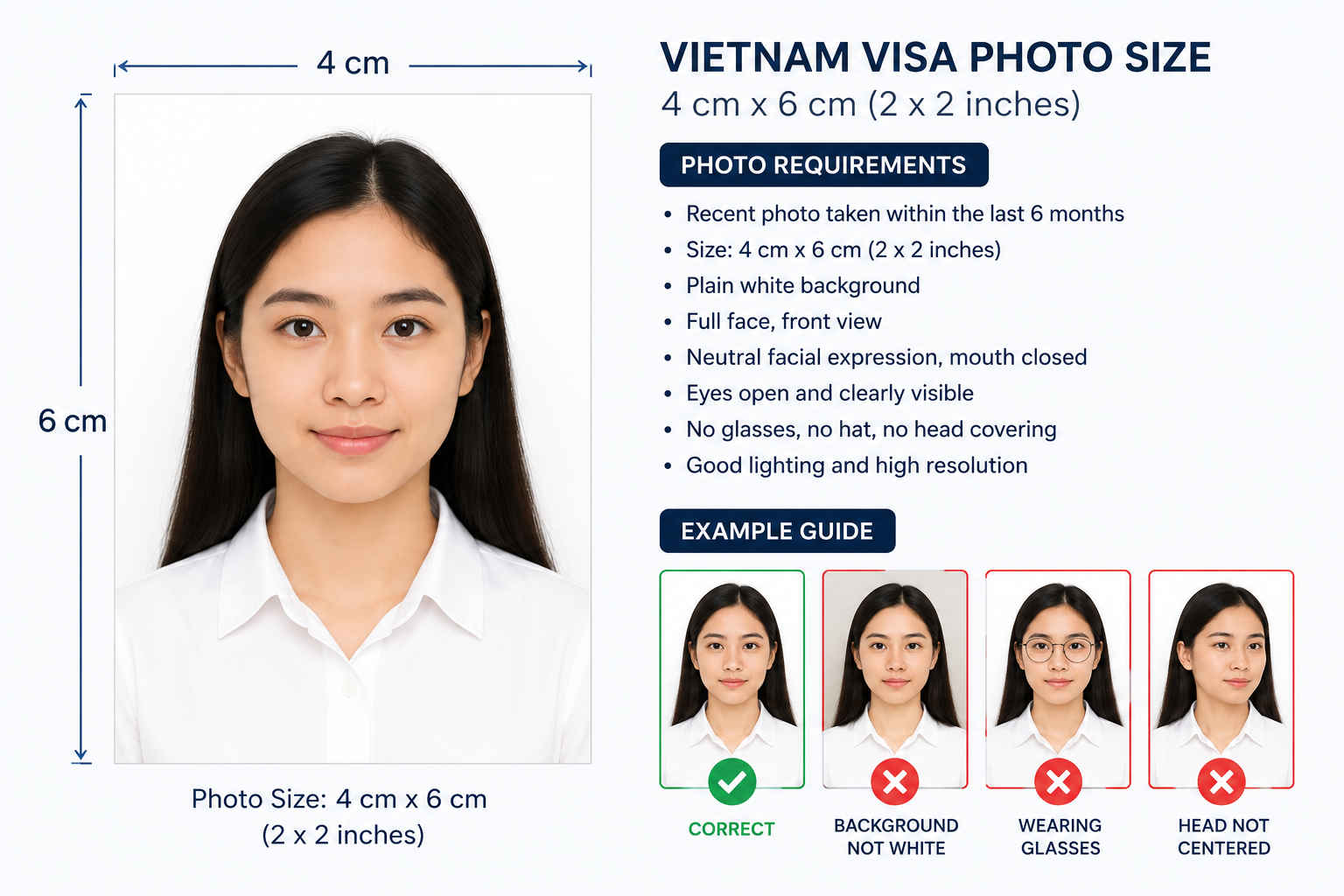
The standard Vietnam visa photo size is 4 cm × 6 cm (or 2 × 2 inches). Your photo should be recent, clear, and taken against a plain white background.
Can I take my Vietnam visa photo using a smartphone?
Yes. You may use a smartphone as long as the photo is high resolution, well-lit, taken against a white background, and clearly shows your full face without filters or excessive editing.
Can I wear glasses in my Vietnam visa photo?
It is recommended to remove glasses when taking your visa photo, especially if they create glare or partially cover your eyes. Your face should be fully visible for identification purposes.
How recent should my Vietnam visa photo be?
Your photo should have been taken within the last six months so that it accurately reflects your current appearance. Older photos may not be accepted.
Can children use the same photo requirements?
Yes. Children are also required to submit a visa photo that meets the same standards. The child's face should be clearly visible, with no other people or objects appearing in the image
What happens if my visa photo doesn't meet the requirements?
If your photo does not meet the required standards, your application may be delayed while you are asked to submit a new image. Checking your photo before uploading can help avoid unnecessary processing delays.
Do I need to upload my passport bio page for a Vietnam eVisa?
Yes. In addition to your portrait photo, you must upload a clear image or scan of your passport's biographical (bio) page when applying for a Vietnam eVisa. This page contains your personal information and is required to verify your identity during the application process.
What makes a passport bio page acceptable for a Vietnam eVisa application?
Vietnam Visa Guidelines
Your passport bio page should be clear, high resolution, and fully visible. Ensure that all personal information, your passport photo, and the ICAO machine-readable lines (MRZ) at the bottom of the page are readable. Avoid glare, shadows, blur, or cropped edges.
Can I take a photo of my passport bio page with my phone?
Yes. You may use a smartphone to capture your passport bio page, provided the image is sharp, well-lit, and free from reflections. Make sure the entire bio page is visible and that all text can be read clearly before uploading it.
What happens if my passport bio page is blurry or incomplete?
A blurry, cropped, or low-quality passport bio page may delay your Vietnam eVisa application. If the information cannot be read clearly, you may be asked to upload a new image before your application can be processed.
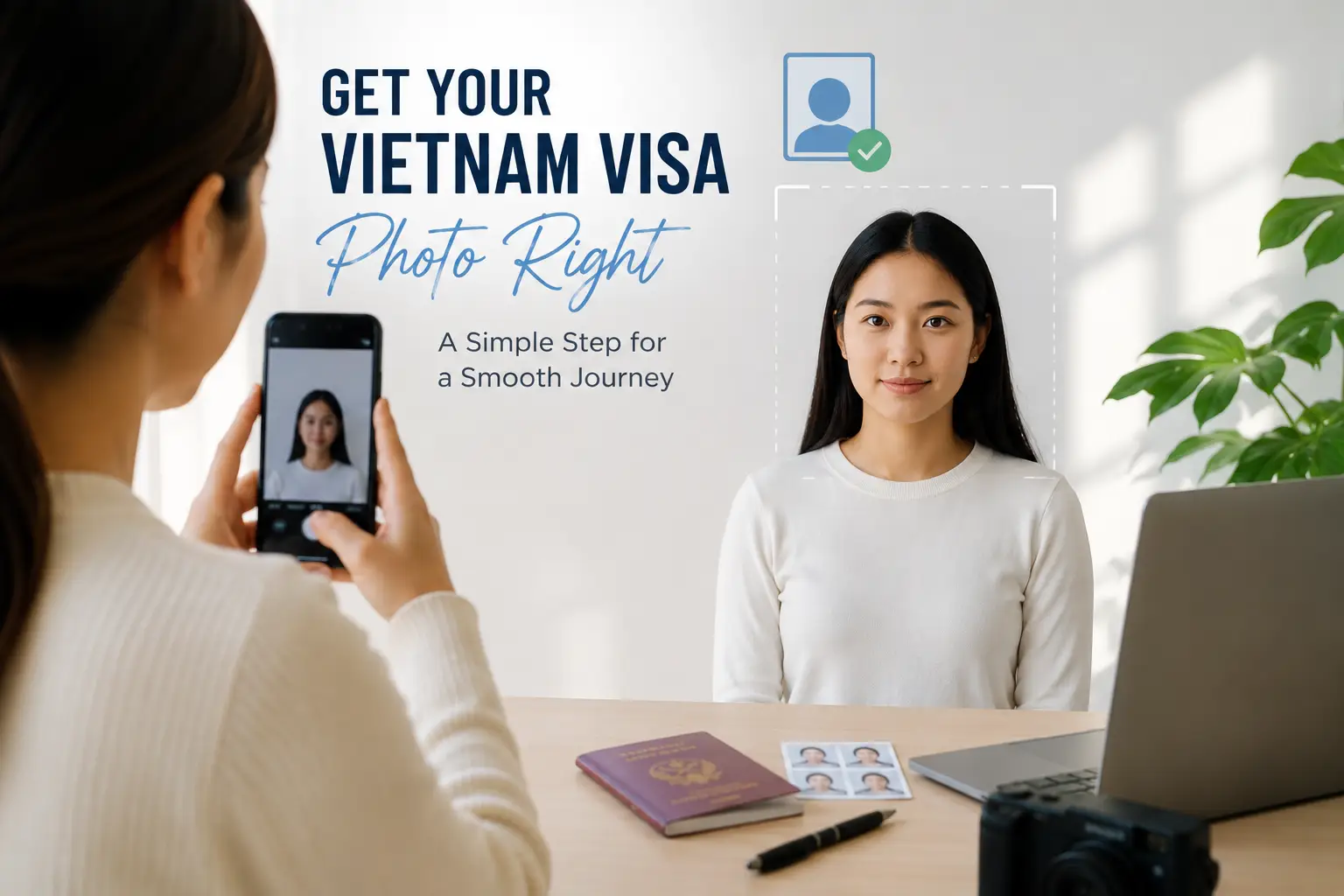
Can You Take Your Vietnam Visa Photo at Home?
Yes. Many travellers successfully take their Vietnam visa photo using a smartphone or digital camera.
To achieve the best results:
- Stand against a plain white wall.
- Use natural lighting whenever possible.
- Hold the camera at eye level.
- Keep your head centred.
- Remove beauty filters or editing effects.
- Wear clothing that contrasts with the background.
After taking the photo, review it carefully to ensure it is clear, well-lit, and accurately represents your appearance.
Vietnam Visa Photo Guidelines Quality
Why Clear Photos and Passport Scans Matter?
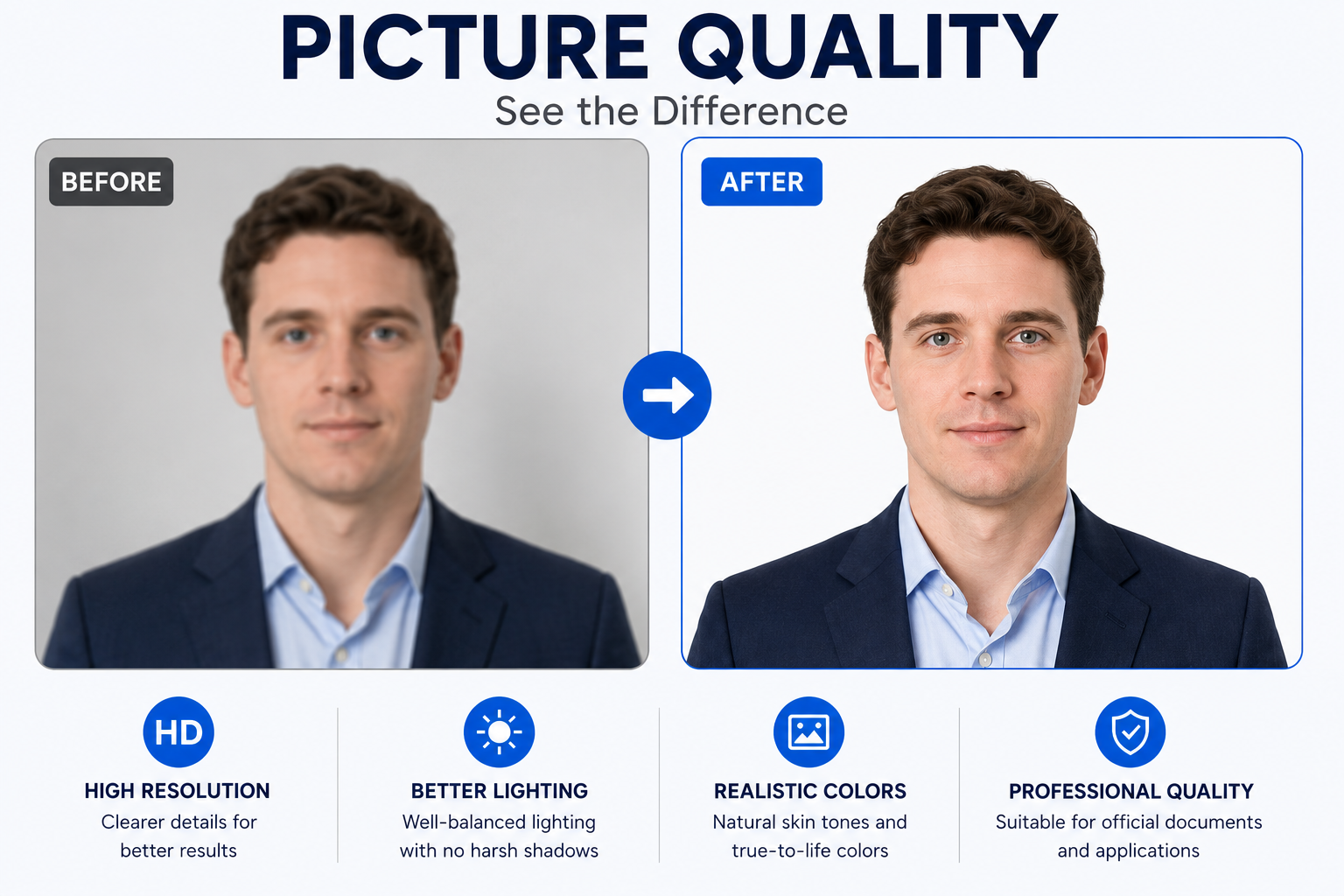
Your passport photo and passport bio page are two of the most important documents submitted during the Vietnam eVisa application process. Both are used to verify your identity, so clear, high-quality images help reduce the likelihood of delays or requests for additional documents.
Submitting a high-quality photo helps reduce the likelihood of delays caused by:
- Identity verification issues.
- Poor image quality.
- Incorrect document formatting.
- Additional review requests.
A few extra minutes spent preparing your photo can help make your application process much smoother.
What Happens If Your Photo & Doesn’t Meet the Requirements?
If your submitted photo does not meet Vietnam’s visa requirements, immigration authorities may request a replacement image or additional information.
This could result in:
- Longer processing times.
- Delayed travel plans.
- Additional document requests.
To minimise these risks, always review your documents carefully before submitting your application.
Need Help Before You Submit?
Preparing your Vietnam eVisa application involves more than uploading a passport photo. Both your portrait photo and your passport bio page must meet the required standards to help avoid unnecessary delays during processing.
At Vietnam Visa Express, our experienced team carefully reviews applications to help identify common issues before submission, including passport photo quality, document accuracy, and application details.
Whether you’re applying for the first time or require urgent assistance, we’re here to help make the process as smooth as possible.
A Few Simple Tips Before You Apply
Before submitting your Vietnam eVisa application, remember to:
✔ Use a recent passport photo.
✔ Ensure the background is plain white.
✔ Check that your face is fully visible.
✔ Review your passport information carefully.
✔ Upload clear, high-resolution documents.
✔ Double-check your application before submitting.
Taking these simple steps can help reduce unnecessary delays and improve your overall application experience.
Ready to Apply?
A suitable passport photo is an important part of every Vietnam eVisa application. By understanding the latest Vietnam Visa Photo Guidelines and preparing your documents carefully, you can improve the chances of a smooth application process.
If you’d like additional guidance before submitting your application, Vietnam Visa Express offers professional support to help travellers prepare their documents with confidence.
Ready to start your journey? Apply for Vietnam eVisa online today with Vietnam Visa Express.
Vietnam eVisa Requirements at a Glance:
Where can I enter Vietnam with E-visa?
An E-visa for Vietnam works at 33 ports of entry. You can see their list above, in the Applicable ports of entry section.
How far in advance should I apply for Vietnamese E-visa?
It normally takes 3-5 working days for the Vietnam Immigration Department to process your application for Vietnam E-visa.
However, the processing time may be longer (up to 15 days) due to certain requirements from the Immigration Department or a large number of applicants, or public holidays. As such, we highly recommend you start your application for the Vietnam E-visa 1-2 weeks before departure.
How to find registration code for E-visa to Vietnam?
After completing the form, you will verify your information and in this step you will receive your registration code. Please remember that this code is not sent to your email.
You should take a screenshot of your registration code and save it somewhere in your device as it is very important. Without it, you cannot check your visa status and download the visa letter.
How can I pay for my e-visa fee?
You can pay for the e-visa fee by credit or debit cards!
Do I need to pay for the stamping fee on arrival?
No, there is no additional stamping fee required on arrival. The e-visa fee listed above is the only payment needed for your e-visa application.